

If you have been told your sugar is high, it can feel confusing and scary. You may wonder if it is “temporary,” if you will need insulin, or if it can be controlled with food and walking. Many people also worry about silent damage to the eyes, kidneys, nerves, and heart. That is exactly why people search diabetes – types, symptoms and treatment and want a clear explanation.
Here is the direct answer: diabetes is not one single condition. There are different types, and each type has a different cause and treatment plan. At Sravani Hospitals, we help you identify your type, understand your reports, and take the next step with a practical plan. Keep reading to know the types, common symptoms, tests, and treatment options.
What Is Diabetes In Simple Words?
Diabetes is a condition where your blood sugar stays higher than normal because your body is not using insulin well, not making enough insulin, or both.
Insulin is a hormone that helps sugar move from the blood into the cells for energy. When insulin does not work properly, sugar stays in the blood and slowly affects many organs if not controlled.
What Are The Different Types Of Diabetes?
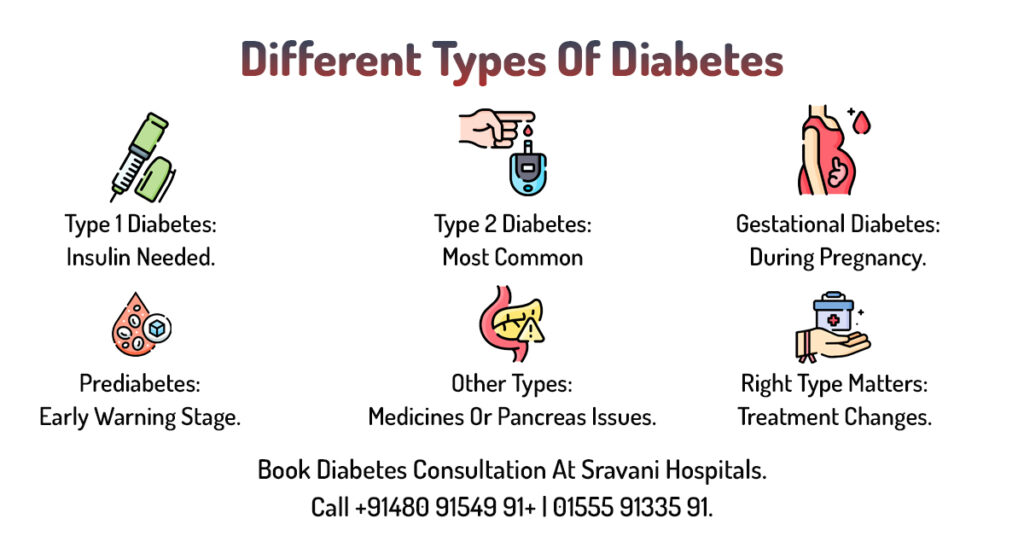
The main types are type 1 diabetes, type 2 diabetes, gestational diabetes, and prediabetes. Some people also have less common types due to genes, hormones, medicines, or other health conditions.
Type 1 Diabetes
Type 1 diabetes happens when the body’s immune system damages the insulin-producing cells, so the body makes very little or no insulin. It often starts in childhood or young adulthood, but it can start later too. Most people with type 1 need insulin.
Type 2 Diabetes
Type 2 diabetes is the most common type. It happens when the body does not use insulin properly (insulin resistance) and later may not make enough insulin. It often develops gradually and may be present for years before it is diagnosed.
Gestational Diabetes
Gestational diabetes happens during pregnancy. It usually improves after delivery, but it increases the mother’s future risk of type 2 diabetes and can affect the baby’s birth weight and health if sugars are not controlled.
Prediabetes
Prediabetes means blood sugar is higher than normal but not high enough to be called diabetes. This stage matters because many people can prevent or delay type 2 diabetes with lifestyle changes.
Other Less Common Types
These are not rare, but they are less common than type 2:
- Diabetes due to certain genetic patterns.
- Diabetes due to pancreas issues.
- Diabetes due to hormone problems.
- Diabetes due to long-term steroid use or some medicines.
This is the core of Diabetes – types, symptoms and treatment: first confirm the type, then build the right plan.
How Can You Tell Which Type Of Diabetes You Might Have?
You cannot confirm the type only by symptoms, but the pattern gives clues.
Type 1 Is More Likely When
- Symptoms start suddenly and feel intense.
- Weight loss happens without trying.
- Thirst and urination increase quickly.
- A child, teen, or young adult is affected, though adults can also get it.
Type 2 Is More Likely When
- Symptoms develop slowly or are not noticed.
- There is family history of diabetes.
- There is belly fat, low activity, or long-term stress.
- Sugar is high on routine tests without strong symptoms.
Gestational Diabetes Is More Likely When
- Sugar becomes high during pregnancy testing.
- There is history of gestational diabetes in past pregnancy.
- There is family history of type 2 diabetes.
If you are unsure, a proper evaluation at a diabetes hospital in Hyderabad helps confirm the type and avoid guesswork.
What Are The Common Symptoms Of Diabetes?
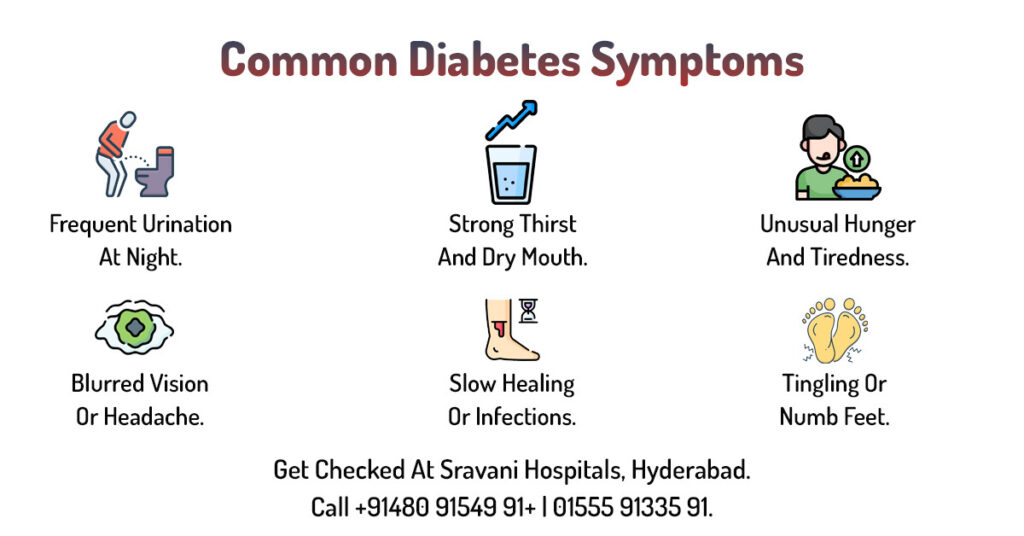
Diabetes symptoms can be obvious in some people and silent in others. Many people get diagnosed only after a routine test.
Common Symptoms
- Frequent urination, especially at night.
- Strong thirst and dry mouth.
- More hunger than usual.
- Tiredness and low energy.
- Blurred vision.
- Slow wound healing.
- Frequent skin or urine infections.
- Tingling or numbness in feet or hands, especially in long-standing diabetes.
Symptoms That Need Urgent Care
- Very high sugar with vomiting.
- Fast breathing or severe weakness.
- Confusion or fainting.
If symptoms are severe or sudden, do not delay. At Sravani Hospitals, the best diabetic hospital in Hyderabad, we guide urgent assessment and safe stabilisation.
What Causes Diabetes And Who Is At Higher Risk?
Diabetes causes depend on the type, but risk increases with genetics, lifestyle factors, and certain health conditions.
Common Risk Factors For Type 2 Diabetes
- Family history of diabetes.
- Overweight, especially around the waist.
- Low physical activity.
- High blood pressure or cholesterol issues.
- History of gestational diabetes or PCOS.
- Long-term stress and poor sleep patterns.
Type 1 diabetes is not caused by eating sugar. It is linked to immune factors. Gestational diabetes is linked to pregnancy hormone changes and insulin resistance.
Which Tests Confirm Diabetes And Help Track Control?
Diabetes is diagnosed and tracked using a few simple blood tests. Your doctor chooses the right test based on your situation.
Common Tests
- Fasting blood sugar.
- HbA1c, which shows average sugar levels over about 2 to 3 months.
- Post-meal blood sugar.
- Oral glucose tolerance test, often used in pregnancy.
Test to Confirm Diabetes And What It Tells You
| Test | What It Helps You Understand |
| Fasting sugar | Baseline sugar level after fasting. |
| Post-meal sugar | How much sugar rises after food. |
| HbA1c | Overall sugar control over the last few months. |
| Pregnancy sugar test | Detects gestational diabetes and guides care. |
Experts at Sravani Hospital, rated as the best diabetes hospital in Hyderabad, not only run tests. Instead, we explain what each result means for your daily routine.
What Is The Treatment For Each Type Of Diabetes?
Diabetes treatment depends on the type, your sugar levels, your age, your weight, and your overall health. Treatment is usually a mix of lifestyle changes, medicines, monitoring, and complication prevention.
Type 1 Diabetes Treatment
- Insulin is usually required.
- Meal planning and routine monitoring are important.
- Education on low sugar episodes and sick-day care matters.
Type 2 Diabetes Treatment
- Lifestyle changes are the base.
- Tablets may be started based on sugar levels.
- Some people need insulin later, especially if sugars stay high for long.
- Regular follow-up helps adjust treatment safely.
Gestational Diabetes Treatment
- Food planning and walking after meals help many women.
- Monitoring is important because pregnancy needs tighter control.
- Some women need insulin for safe control during pregnancy.
Prediabetes Treatment
- Weight reduction, regular walking, and balanced meals can prevent progression.
- Follow-up testing is important, even if you feel fine.
This is why people look for the best diabetic hospital in Hyderabad. They want a plan that fits their real life, not a generic list. If you’re also looking for one, book your appointment at Sravani Hospitals now.
What Food And Lifestyle Changes Help Control Diabetes Best?
Lifestyle changes work best when they are simple, realistic, and consistent.
Daily Habits That Help Most People
- Eat regular meals and avoid skipping breakfast.
- Add more vegetables and protein to each meal.
- Reduce sugary drinks and packaged snacks.
- Choose whole grains more often than refined flour items.
- Walk after meals whenever possible.
- Sleep on time and manage stress daily.
Practical Meal Plate Guide
- Half plate: vegetables and salad.
- Quarter plate: protein like dal, eggs, fish, chicken, paneer.
- Quarter plate: roti or rice in the advised portion.
A supportive team Sravani Hospitals, the most trusted diabetes hospital in Hyderabad will help you set targets that you can actually follow long term.
What Complications Can Diabetes Cause If It Is Not Controlled?
Diabetes complications often build slowly, which is why regular monitoring matters even when you feel fine.
Common Complications
- Eye problems and vision changes.
- Kidney damage.
- Nerve issues, especially numbness and burning in feet.
- Slow wound healing and foot ulcers.
- Heart and blood vessel disease.
The good news is that many complications can be prevented with consistent sugar control, blood pressure control, and regular screenings.
When Should You See A Doctor For Diabetes?
You should see a doctor if you have symptoms, high readings on home checks, or risk factors with recent weight gain.
Book A Consultation If
- Your fasting or post-meal sugars are repeatedly high.
- You have frequent urination, thirst, tiredness, or blurred vision.
- You are pregnant and your sugar test is abnormal.
- You have tingling or numbness in feet or delayed wound healing.
People usually search for the best diabetic hospital in Hyderabad when they want clear answers and a safe treatment plan. That is a good decision when sugars are uncertain.
Book Your Diabetes Consultation With Sravani Hospitals Now
If you are confused about your reports or your sugar readings keep fluctuating, it is safer to get a clear diagnosis and a step-by-step plan. The right treatment depends on the type of diabetes, your daily routine, and your health goals.
At Sravani Hospitals, you can consult a doctor, understand your tests, and get a practical plan for food, activity, medicines, and follow-up. If you are looking for a diabetes hospital in Hyderabad or the best diabetic hospital in Hyderabad, you can book an appointment and get guidance that is clear, calm, and personalised.
Call us now at +91 91335 01555 | +91 91549 91480 to book your appointment.
FAQs
What Are The Main Types Of Diabetes?
The main types are type 1 diabetes, type 2 diabetes, gestational diabetes, and prediabetes. Some people also have less common types linked to other conditions or medicines.
Can Prediabetes Turn Into Diabetes?
Yes, it can. Many people can delay or prevent type 2 diabetes with weight control, walking, and regular follow-ups.
Does Type 2 Diabetes Always Need Insulin?
No. Many people manage with lifestyle changes and tablets. Insulin may be needed later if sugars stay high or the body stops making enough insulin.
What Is The Best Test To Track Diabetes Control?
HbA1c is commonly used because it reflects average sugar control over the past 2 to 3 months. Doctors may also use fasting and post-meal readings.
Can Diabetes Be Controlled Without Medicines?
Some early cases of type 2 diabetes and prediabetes can improve with lifestyle changes. Many people still need medicines for safe and stable control.
Why Do People With Diabetes Need Regular Eye And Kidney Checks?
Because diabetes can affect the eyes and kidneys quietly. Screening finds early changes before they become serious.