

Feeling like the room is spinning can be scary. Some people feel unsteady while walking. Some feel sick, sweaty, or suddenly afraid they might faint. The biggest worry is usually this: is it just an ear issue, or is it something serious in the brain? This is why people search Vertigo: Symptoms, Causes & Treatment and look for clear answers.
Here is the direct answer: Vertigo is a false spinning or moving sensation. It most often happens due to inner ear balance problems, but in some cases it can be linked to the brain and needs urgent evaluation.
At Sravani Hospitals, our neuro team helps you identify the cause, rule out red flags, and plan treatment step by step. Keep reading to understand types, causes, warning signs, and what to do next.

What Exactly Is Vertigo And How Is It Different From Normal Dizziness?
Vertigo is a specific kind of dizziness where you feel spinning, swaying, or that the surroundings are moving even when you are still.
Normal dizziness can mean lightheadedness, weakness, or feeling faint. Vertigo is more about a movement illusion, and it often comes with balance disturbance, nausea, or eye movement changes.
What Are The Most Common Symptoms Of Vertigo?
Vertigo symptoms usually include spinning sensation, imbalance, nausea, and trouble focusing during head movement.
Common Vertigo Symptoms People Notice
- Spinning or moving feeling.
- Unsteadiness while walking.
- Nausea or vomiting.
- Sweating or feeling clammy.
- Head movement making symptoms worse.
- Blurred vision or trouble focusing.
- Ringing in the ear or hearing changes in some cases.
Vertigo Symptom And What It Often Suggests
| What You Feel | What It May Point To |
| Vertigo for seconds when you turn in bed | Inner ear positional vertigo is common. |
| Vertigo for hours with ear fullness or hearing change | Inner ear condition may be involved. |
| Vertigo with severe headache, weakness, speech trouble | Needs urgent check for brain causes. |
If you are searching the best neurology hospital in Hyderabad for repeated vertigo episodes, this symptom pattern is what a specialist will map first. Track your symptoms, and book a consultation with the best neurologist in Madhapur at Sravani Hospitals.
What Are The Main Types Of Vertigo?
The two main types are peripheral vertigo (usually inner ear related) and central vertigo (brain related and less common).
Peripheral Vertigo Types You May Hear About
Peripheral vertigo is the most common type and often involves the inner ear balance system.
- Bppv: Brief spinning triggered by head position changes.
- Vestibular neuritis: Sudden strong vertigo, often linked to a viral cause.
- Labyrinthitis: Vertigo with hearing symptoms in some cases.
- Meniere’s disease: Vertigo episodes with ear fullness or hearing symptoms in some people.
Central Vertigo Types You Should Not Ignore
- Central vertigo happens when the brain areas controlling balance are affected, such as in stroke or head injury.
- Central vertigo often comes with more serious walking difficulty or other neurological signs.
This is one reason people choose the best neuro hospital in Hyderabad for a full evaluation, especially when symptoms do not match typical inner ear patterns.
What Are The Most Common Causes Of Vertigo?
The most common causes involve the inner ear, but infections, migraines, medicines, and brain conditions can also cause vertigo.
Common Vertigo Causes Doctors Check For
- Inner ear positional issue (Bppv).
- Viral infection affecting balance nerve (vestibular neuritis).
- Ear infection or inflammation (labyrinthitis).
- Migraine related vertigo in some people.
- Medicine related dizziness in some cases.
- Head injury.
- Brain causes like stroke (less common, but urgent to rule out).
If you are consulting a neurologist in Madhapur, these are the cause buckets they will usually narrow down first.
When Is Vertigo An Emergency And Not Just A Balance Issue?
Vertigo is an emergency when it comes with warning signs like weakness, speech trouble, severe headache, fainting, or sudden trouble walking.
Go For Urgent Evaluation If You Have Any Of These
- Weakness in face, arm, or leg.
- Trouble speaking or understanding speech.
- Sudden severe headache that feels unusual.
- Double vision or sudden vision changes.
- Chest pain, fainting, or severe breathlessness.
- New severe trouble walking or standing.
If you are searching for the best neuro hospital in Madhapur because vertigo feels “different” this time, use these red flags to decide quickly. Schedule your consultation at best neuro hospital in Madhapur now at +91 91335 01555 | +91 91549 91480.
How Do Doctors Diagnose Vertigo And Find The Exact Cause?
Doctors diagnose vertigo by listening to the symptom pattern, doing balance and nerve checks, and using tests like positional maneuvers and imaging only when needed.
What Usually Happens In A Vertigo Evaluation?
- History: When it started, triggers, duration, hearing symptoms, headache, medicines.
- Examination: Eye movements, balance, walking, and basic nerve checks.
- Positional tests: Often used when Bppv is suspected.
- Imaging: MRI or CT may be advised if central causes are suspected.
Test to Diagnose Vertigo And Why It Is Done
| Test | What It Helps Confirm |
| Positional testing | Confirms positional vertigo patterns. |
| Balance and nerve examination | Checks if signs suggest brain involvement. |
| MRI or CT scan | Helps rule out serious central causes when needed. |
This is what people usually expect when they search the best neurology hospital in Hyderabad for vertigo that keeps coming back.
What Is The Best Treatment For Vertigo?
Vertigo treatment depends on the cause and can include repositioning maneuvers, short term medicines for nausea, balance exercises, and treating infections when present.
Treatment Options Based On Cause
- For Bppv: Canalith repositioning maneuvers are commonly used.
- For infection related causes: Treatment depends on the infection type and severity.
- For ongoing imbalance: Balance exercises may be advised.
- For severe nausea: Short term medicines may be used to control symptoms.
If you are comparing the best neuro hospital in Hyderabad versus local clinics, look for a team that explains why a specific treatment matches your pattern, not just a generic “dizziness tablet.”
What Can You Do At Home During A Vertigo Episode?
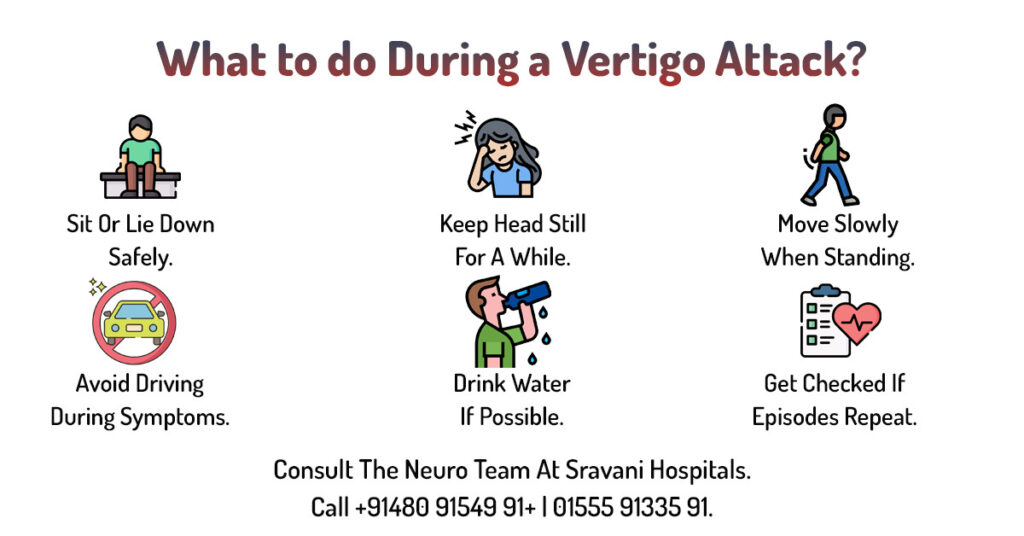
During a vertigo episode, the safest home steps are to sit or lie down, avoid sudden head movement, hydrate, and prevent falls.
Simple Do’s During Vertigo
- Sit down immediately to avoid falling.
- Keep your head still for a few minutes.
- Move slowly when standing up.
- Avoid driving until you feel stable.
- Drink water if you can keep it down.
- Use support while walking, especially at night.
Avoid These Common Mistakes
- Do not ignore repeated episodes.
- Do not self medicate for weeks without diagnosis.
- Do not keep driving if vertigo is active.
How Can You Prevent Vertigo From Coming Back?
You can reduce repeat episodes by treating the root cause, following balance exercises if advised, avoiding triggers, and getting follow up when symptoms change.
Practical Prevention Steps
- Complete treatment fully if infection is involved.
- Follow balance exercises if your doctor suggests them.
- Manage migraine triggers if vertigo links to headaches.
- Review medicines if symptoms started after a new drug.
- Get follow up if frequency increases or pattern changes.
If you are seeing a neurologist in Madhapur for recurring vertigo, prevention planning is usually part of the visit, not an afterthought.
Book Your Vertigo Consultation At Sravani Hospitals Now
If your vertigo is repeating, affecting work, or making you fear walking alone, it is better to identify the cause instead of managing it only with short term relief. Proper evaluation can confirm whether it is positional vertigo, an infection, migraine related, or something that needs urgent neuro attention.
At Sravani Hospitals, you can consult a specialist team that checks symptoms carefully, rules out red flags, and explains a clear plan. If you are searching for the best neuro hospital in Hyderabad, the best neurology hospital in Hyderabad, the best neuro hospital in Madhapur, or a trusted neurologist in Madhapur, you can book an appointment for step by step guidance.
Call: +91 91335 01555 | +91 91549 91480
FAQs
What Is The Most Common Cause Of Vertigo?
Bppv is one of the most common causes and often triggers brief spinning when you change head position.
Can Vertigo Go Away On Its Own?
Yes, some vertigo episodes can improve, but repeated attacks should be evaluated to find the root cause.
How Long Does A Vertigo Episode Usually Last?
It depends on the cause. Bppv often lasts seconds to minutes, while infections can cause longer lasting vertigo.
Does Vertigo Always Mean A Brain Problem?
No. Many cases come from the inner ear, but red flag symptoms need urgent evaluation to rule out brain causes.
Which Doctor Should I See For Vertigo?
Start with a doctor who can assess balance and neurological signs. If symptoms repeat or are severe, seeing a neurologist is useful.
When Should I Avoid Driving With Vertigo?
Avoid driving when symptoms are active or unpredictable. If you drive regularly, ask your doctor for safety advice.