

Hearing the word heart surgery can make the room go quiet. A moment filled with discussing tests, thoughts about ICU rooms, recovery, and what could go wrong. Most people search online for answers related to heart surgery that they can easily understand. But a lot of blogs either drown you in medical terms or give details that do not help you decide what steps should be taken.
This blog from the team at Sravani Hospital is written to clear the confusion. It explains what heart surgery really means, its types, what happens before and during the surgery, how recovery looks like, and what risks doctors watch for.
If you are searching everything you need to know about cardiac surgery and comparing cardiology hospital in Hyderabad, this guide will help you feel more prepared before you walk into your next appointment.
What is Heart Surgery and When Do Doctors Recommend It?
Heart surgery is performed when there is some serious issue like blocked blood flow, damaged valve, or major vessel issue, and medicines alone are not enough. Doctors suggest surgery when the benefit is long-term and the risk of delaying the treatment is higher. It may include:
- Blocked coronary arteries that need better blood flow
- Heart valves that are too tight or leaking
- Certain rhythm problems that need a surgical fix
- Major vessel issues need repair
A common confusion is that people mix up stents with heart surgery. A stent is a tube placed in a blood vessel procedure, while surgery is discussed when the condition, location, or severity makes a surgical fix safer for future results.
What Are The Main Types Of Heart Surgery?
The main types of heart surgery include bypass surgery, valve repair or replacement, ICD implantation, aneurysm repair, and minimally invasive approaches. Here is a simple way to remember the types and what they fix.
| Type Of Heart Surgery | What It Typically Fixes |
| CABG (Bypass Surgery) | It helps improve blood flow around blocked coronary arteries. |
| Valve Repair Or Replacement | It fixes leaky or narrow heart valves. |
| Pacemaker Or ICD Implant | It helps control dangerous rhythm problems. |
| Aneurysm Repair | It repairs a weak and bulging vessel wall. |
| Minimally Invasive Heart Surgery | Used for smaller incisions for selected and suitable cases. |
What Happens Before Heart Surgery?
A cardiologist in Kukatpally confirms the diagnosis, checks overall fitness, reviews the medications, plans anesthesia, and then prepares the surgery plan.
What usually happens:
- Your doctor reviews symptoms, past history, and reports
- Blood tests and heart tests are done
- Medication lists are checked
- You get instructions about eating, drinking, and what to bring for admission
A simple thing that helps: carry all your past records in one folder. Most delays happen because reports are scattered.
What Happens During The Heart Surgery Procedure?
During heart surgery, the patient is given anesthesia, then the heart function and vital signs are monitored continuously.
Typical steps include:
- Anesthesia so you pain-free
- Surgical access based on the surgery type
- The repair itself
- Careful control of bleeding, rhythm, oxygen, and temperature
- Shifting to ICU for close monitoring post surgery
Many open-heart treatments involve a heart-lung bypass machine depending on the type of surgery. Do not hesitate to ask for a simple language explanation from your cardiologist.
What Are The Common Risks Of Cardiac Surgery?
As per best cardiology hospital in Hyderabad common risks include bleeding, infection, arrhythmias, blood clots that can cause stroke, organ stress (like kidneys), and temporary memory issues.
Heart surgery is done to reduce long-term risk, but it carries short-term risks because it is a major treatment. Risk is higher when:
- Surgery is an emergency
- Age is higher
- Diabetes, kidney disease, or lung disease is present
- The heart function is already weak
This is why pre-surgery checks matter. These checks help the team plan safer anesthesia, safer monitoring, and safer recovery.
What Is The Recovery Timeline After Heart Surgery?
After the heart surgery is performed the recovery timeline depends on the surgery type and health of the patient. Most patients need around six to twelve weeks to recover post surgery. Yet. recovery is never in a straight line, it improves in steps. Here is a realistic timeline:
| Timeframe | Main Focus | What You Notice Most |
| First Week | Monitoring and safety | Pain control, breathing practice, short walks with support, wound checks |
| Weeks 2 To 4 | Routine building | Low energy, sleep changes, better appetite, longer walks, easy fatigue |
| Weeks 4 To 8 | Strength and rehab | Less fear in movement, structured rehab, slow return to daily tasks |
| Weeks 8 To 12 | Stability and stamina | Better confidence, follow ups, rehab progress, medication fine tuning |
If you are reading this while searching about everything you need to know about cardiac surgery, remember recovery feels easier when you have a written plan and someone you can contact, when symptoms feel confusing.
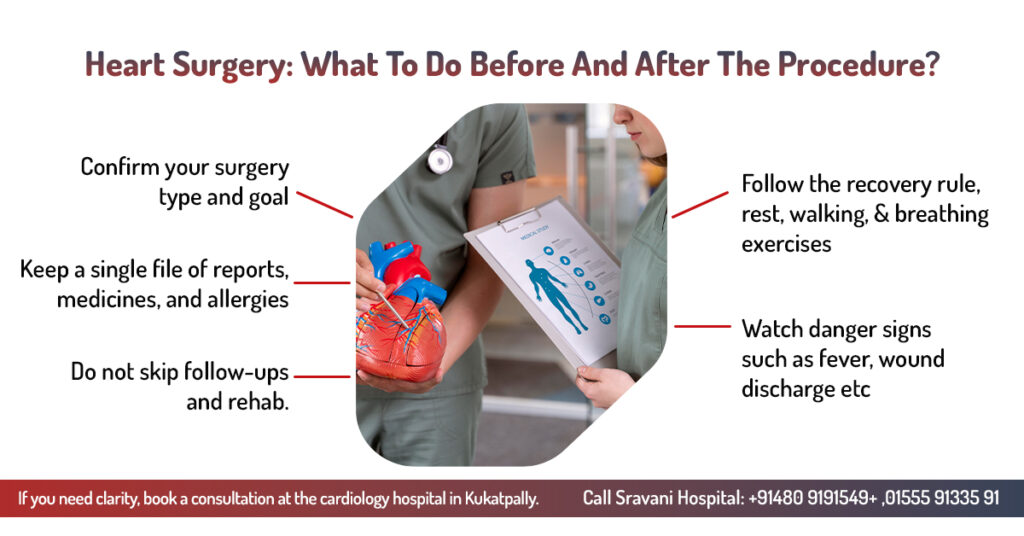
| Infographic Heart Surgery: What To Do Before And After The Procedure?Confirm your surgery type and goalKeep a single file of reports, medicines, and allergies Follow the recovery rule, rest, walking, & breathing exercisesWatch danger signs such as fever, wound discharge etcDo not skip follow-ups and rehab.If you need clarity, book a consultation at the cardiology hospital in Kukatpally.Call Sravani Hospital: +91 91335 01555, +9191549 91480 |
Schedule Your Consultation at Sravani Hospital For Cardiac Care In Kukatpally And Hyderabad
Choose a hospital that gives you fast evaluation, clear report explanation, and a proper follow-up plan. Sravani Hospitals provides one place for patient consultation and ongoing follow-ups.
When people search a cardiology hospital in Hyderabad, the first need is speed, that is timely consultation, tests, and clear next steps. Sravani Hospitals has branches providing quick access to tests and report review.
To book, you can call +91 91335 01555 or +91 91549 91480.
FAQs
How Long Does Recovery After Open-Heart Surgery Take?
Most patients take about six to twelve weeks to recover after an open heart surgery, and sometimes even longer depending on their health and surgery type.
Which Tests Decide if Heart Surgery is Needed or not?
Cardiologists in Kukatpally use tests like ECG, echo, blood tests, symptom review, and imaging when needed. The exact set depends on the patient’s heart problem.
When Should I Consult A Cardiologist In Kukatpally Or Hyderabad?
Early consultation when you have chest pain, breathlessness, fainting, swelling, or repeated abnormal reports, is beneficial. If you are searching for a cardiology hospital in Hyderabad or a cardiology hospital in Kukatpally, book a report review at Sravani Hospital today.