

What happens before the first session? What does the treatment day feel like? What do you do between cycles? These questions come when a doctor says chemotherapy is needed.
India recorded over 1.5 million new cancer cases in 2024, according to the GLOBOCAN 2024 report. For many of those patients, chemotherapy is an important part of the treatment. Knowing what to expect from chemotherapy and its stages makes it less risky to walk into.
At Sravani Hospitals in Madhapur and KPHB, the oncology team has been supporting cancer patients and families since 2022. Specialist consultations, blood monitoring, treatment coordination and follow-up care all are available 24 by 7 at both branches.
What Happens At Each Stage Of A Chemotherapy Cycle?
Chemotherapy uses medicine to attack cancer cells that divide faster. A chemotherapy cycle is a structured process or a sequence of treatment days followed by rest days, repeated over weeks. Depending on cancer type and stage most patients need four to eight cycles and each cycle runs two to four weeks. Here is how the stages look.
Stage 1: Pre-Treatment Evaluation
A full assessment is done before the chemotherapy starts. This includes blood tests checking liver and kidney function, and white blood cell counts. This actually determines whether the body is ready to begin, what dosage is appropriate, and which drug combination suits the cancer type and the current stage.
Stage 2: Active Treatment
You arrive at the oncology day-care unit. A blood test happens first. It checks if your white blood cell count is high enough to go ahead that day. If it’s too low, the session shifts by a few days. That’s normal.
Once cleared, the nurse sets up a drip. The medicine goes in slowly. Two to six hours, depending on which drugs are being used. You go home the same day in most cases.
Days two and three after the session are usually the hardest. Nausea picks up, appetite drops, the mouth can feel sore. The doctor prescribes anti-nausea medicine before and after each session to manage this window.
Stage 3: Post-Treatment Follow-Up
Most patients feel closer to normal by the 10-14 days. The energy returns, appetite comes back. A blood test is run again before the next cycle to confirm the body is ready.
Your oncologist reviews how you responded to the previous cycle before deciding whether to go ahead, adjust the dose or wait a few extra days. The cycle then repeats until the full course is complete.
How Do You Recover Well Between Sessions?
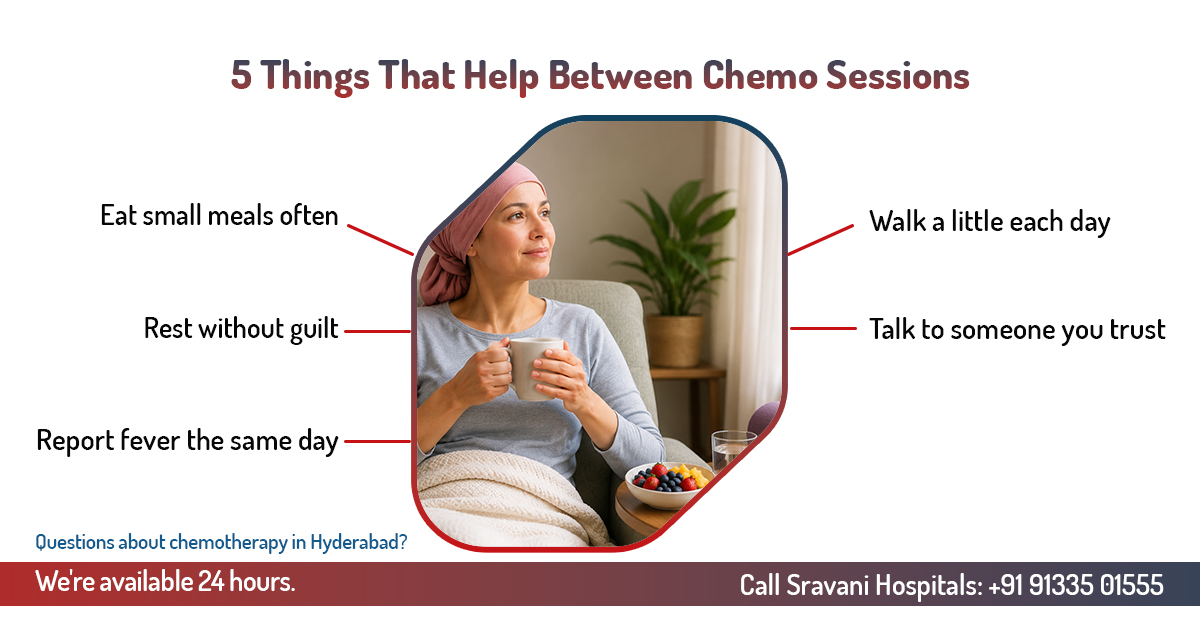
Recovery between cycles isn’t passive waiting. What happens in those days directly affects how you walk into the next session. These five areas make the most difference.
-
- Manage Side Effects Early: Discuss potential side effects with your oncologist before the first session. Keep prescribed anti-nausea medicines and other supportive medicines on hand at home.
- Nutrition And Hydration: Eat small amounts every two to three hours rather than three large meals. And consider a consultation with a nutritionist if appetite loss is persistent.
- Watch For Infection Signs: Fever above 38°C, chills, redness around the drip site or a sudden drop in energy should be reported to the oncology team the same day.
- Light Movement: Short walks of ten to fifteen minutes help circulation and mood. Strenuous exercise should be avoided on low-energy days
- Emotional Support: Anxiety between sessions, fear of the next infusion and low mood are common. They are a natural response to a difficult situation. Yoga and pranayama have clinical evidence supporting their role in reducing cancer-related anxiety.

What Does Chemotherapy Cost In India In 2026?
A single chemotherapy cycle in India costs anywhere between ₹8,000 and ₹2,00,000. Total treatment across all cycles usually falls between ₹2.5 lakh and ₹25 lakh. The range is wide because no two treatment plans are the same. Here are the key factors that determine what you’ll pay:
- Factor 1: Type Of Drug Used: Generic versions of older chemotherapy drugs cost far less than branded ones and meet the same clinical standards.
- Factor 2: Type Of Cancer And Stage: Early-stage cancers typically need fewer cycles and simpler drug combinations. Advanced or metastatic cancers often require longer regimens and more expensive targeted drugs.
- Factor 3: Hospital Type And Setting: Day-care chemotherapy, where you arrive, receive the infusion and go home the same day, costs significantly less than inpatient admission.
- Factor 4: Additional Treatment Costs: Support medicines, blood tests, scans during treatment or post-treatment medicines adds up to the cost.
What About Insurance And Government Schemes?
Most standard health insurance plans cover inpatient chemotherapy. Daycare infusions are increasingly covered under updated IRDAI guidelines, though terms differ by policy.
If eligible, Ayushman Bharat PM-JAY covers approved regimens at empanelled hospitals. The NTR Vaidya Seva scheme in Telangana offers cashless treatment up to ₹25 lakh per family per year. Aarogyasri covers eligible patients too. When in doubt, ask the oncology hospital in Madhapur billing team directly before the first cycle.
Note: Cost figures are indicative. Actual costs vary based on cancer type, stage, drug regimen, number of cycles and individual treatment needs. Get a detailed estimate from your treating oncologist after clinical evaluation.
Looking For An Oncology Hospital In Madhapur Or Hyderabad? Visit Sravani Hospital!
If chemotherapy has been recommended and you’re trying to understand what the process involves, a specialist consultation helps. Sravani Hospitals is the best oncology hospital in Hyderabad with branches in Madhapur and KPHB.
The oncology department handles the full pathway, blood monitoring, imaging coordination, chemotherapy administration, treatment review and follow-up care. The hospital covers 20 plus specialities under one roof. Cancer treatment often connects to blood health, kidney function and nutrition having all of that in one place matters when the picture gets complicated.
As an oncology hospital in Hyderabad, both branches are open 24 hours, seven days a week. Patients from HITEC City, Kondapur and Madhapur find the Madhapur branch closest. KPHB branch serves Kukatpally, Moosapet and Bachupally.
Call: +91 91335 01555 | +91 91549 91480 for booking.
Frequently Asked Questions
How Many Chemotherapy Cycles Are Usually Needed?
Most patients go through four to eight cycles. The exact number depends on cancer type, stage and how the body responds. It’s not always fixed from day one.
Is Chemotherapy Painful?
The infusion itself isn’t painful. Most people sit through it without much discomfort. What’s harder is the 48 to 72 hours after nausea, fatigue, mouth soreness and body ache. Severe pain during a session should be reported the same day.
Can Chemotherapy Be Given As A Daycare Procedure In India?
Yes. Most patients arrive, get the infusion over two to six hours and go home the same day. Daycare is now the standard approach for most routine chemotherapy regimens in India. It also costs considerably less than a full hospital admission.
Does Health Insurance Cover Chemotherapy In India?
Most Insurance plans cover inpatient chemotherapy. Daycare coverage has also expanded under updated IRDAI guidelines, but you must check your policy prior. Government schemes like Ayushman Bharat PM-JAY, Aarogyasri and NTR Vaidya Seva cover approved protocols only for eligible patients. Thus, confirm pre-authorisation requirements before the very first cycle.
How Long Does It Take To Feel Normal Again After Chemotherapy Ends?
Recovery after chemotherapy varies Some people feel better within a few weeks of the final cycle. And hair starts returning within two to three months. So recovery is highly objectives and depends on cancer type, drugs used, and overall health before treatment begins.