

The heart is a muscle. It runs on blood. When the blood supply to it gets cut off suddenly, that part of the heart muscle starts to die. That’s a heart attack. Many people call it a heart stroke, same condition, different name.
Every 33 seconds, India loses someone to a heart attack, according to the Global Burden of Disease report. Also half of all heart attacks in Indian men occur under the age of 50. It’s not just an older person’s condition anymore.
At Sravani Hospitals, Dr. Harshavardhan Reddy K, MD DM Cardiology, Consultant Interventional Cardiologist, has been seeing and treating cardiac cases since 2022. The cardiology department uses ECG, ECHO, TMT stress testing and Holter monitoring to assess heart rhythm, structure and function at both Madhapur and KPHB branches, available 24 hours.
What Are The Symptoms Of A Heart Attack?
Heart attack symptoms & causes include chest pain or pressure, pain spreading to the arm or jaw, and dizziness. These symptoms can appear together or one at a time. Knowing them helps saving a life:
- Chest pain or tightness
- Arm, jaw or neck pain
- Sudden breathlessness
- Cold sweats suddenly
- Nausea or dizziness
- Lightheadedness out of nowhere
One in five heart attacks is a silent heart attack. No chest pain. No obvious emergency. The person finds out later through a routine ECG that there was old damage they never knew about.
Symptoms That Women Often Miss
Women don’t always get the classic chest pain. Their symptoms tend to be quieter.
- Extreme unexplained fatigue
- Jaw or upper back discomfort
- Nausea unrelated to food
- Breathlessness during rest, not effort
Women’s cardiac events are ignored and treated as stress or exhaustion more often. But you must get it checked if something feels wrong and it’s not going away.
What Causes A Heart Attack?
A heart attack happens when a blockage cuts off blood supply to the heart muscle. The heart gets its blood through coronary arteries, the vessels that run along the outside of the heart. Over years, fat and cholesterol build up on the inner walls of those arteries. That buildup is called plaque. When a piece of plaque breaks off suddenly, the body forms a clot around it. That clot blocks the artery.
The heart muscle beyond it stops getting blood. The process builds silently over years.
Who Is At Risk?
-
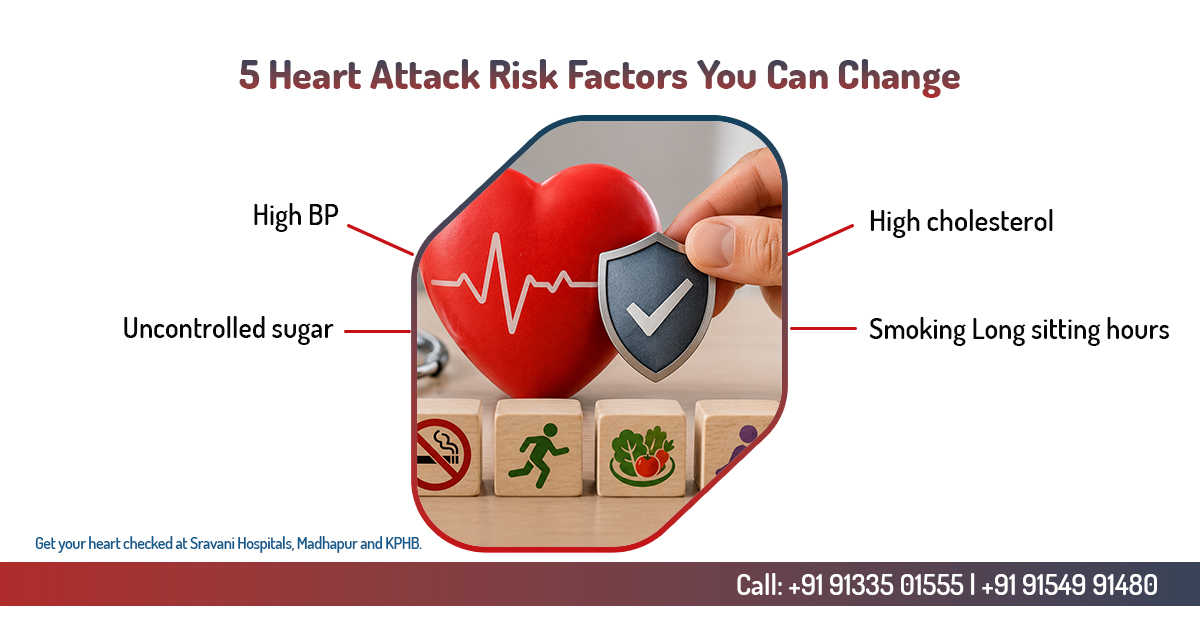
- High blood pressure
- High cholesterol
- Diabetes
- Smoking
- Family history
- Obesity
Other than these long sitting hours, chronic work stress and irregular sleep also add to the risk.
What Should You Do When A Heart Attack Is Happening?
Call 108. Don’t try driving to the cardiology hospital in Kukatpally yourself unless an ambulance is not available. While waiting:
- Sit or lie them down carefully
- Loosen chest and neck clothing
- Note the exact time symptoms started
- Stay with them, keep calm
- Do not give food or water
That time note matters, the ER team will ask for the start time the moment the patient arrives.
How Do You Reduce The Risk Of A Heart Attack?
Up to 80% of heart attacks are preventable, according to the World Heart Federation. Most of that prevention comes down to five things:
- Know your numbers: Blood pressure, blood sugar and cholesterol. One cardiac risk check at a best cardiology hospital in Hyderabad, once a year after 35, catches problems before they become events.
- Move every day: Thirty minutes of walking most days makes a real difference.
- Look at what you eat regularly: Indian diets aren’t the problem. The urban version is. Late restaurant dinners, packaged snacks, high-salt takeaway food three or four times a week.
- Manage stress, not just tolerate it: Chronic stress raises blood pressure and wrecks sleep. Both damage the heart over time.
- Get a cardiac check after 35: An ECG, basic blood panel and BP check take under an hour. Do it once a year.
Don’t Wait For A Second Warning. Get A Cardiac Evaluation At Sravani Hospitals.
Chest discomfort, palpitations, breathlessness on mild effort any of these is enough reason for a cardiac check. At Sravani Hospitals, the cardiology hospital in Hyderabad, Dr. Harshavardhan Reddy K, MD DM Cardiology, Consultant Interventional Cardiologist, leads cardiac evaluation.
We offer:
- ECG and ECHO in-house
- TMT stress testing
- Holter monitoring for palpitations
- 20 plus specialities under one roof
- Open 24 hours, 7 days at both Madhapur and KPHB branches
Call: +91 91335 01555 | +91 91549 91480 to book an appointment.
Frequently Asked Questions
Is A Heart Stroke The Same As A Heart Attack?
Same condition, different name. Heart stroke is how most people refer to a heart attack.
Can A Heart Attack Happen Without Chest Pain?
Yes. One in five heart attacks has no chest pain at all. Fatigue, jaw discomfort, back pain, nausea or breathlessness can be the only signs. If something feels wrong and unusual, get it checked don’t wait for classic symptoms.
What Causes Heart Attacks In Young People In India?
Undiagnosed high BP and cholesterol are the most common silent contributors. Add chronic stress, long desk hours, disrupted sleep and a diet heavy in processed food, the risk builds faster than most people expect.
What Is A Silent Heart Attack?
No chest pain. No obvious alarm. The person may feel slightly off for a day and carry on. It shows up later on a routine ECG as old cardiac damage. More common in women and people with diabetes. The only way to catch it is through a regular cardiac check which is exactly why annual screening after 35 matters.
When Should Chest Pain Be Treated As An Emergency?
Chest pain lasting more than a few minutes, or pain that comes and goes, needs emergency care especially with sweating, breathlessness, arm or jaw pain, or nausea. Don’t wait to see if it passes. Call 108.