

Many people ignore kidney disease because it does not always cause pain or obvious discomfort in the start. A person may have diabetes, high blood pressure, tiredness or swelling and still feel “mostly okay.” That is where the danger lies. A 2025 systematic review reported a pooled chronic kidney disease prevalence of 13.24% in India, which shows how common this problem already is.
The safest way to catch kidney damage early is not to wait for symptoms but to get the right tests on time. Blood tests such as serum creatinine and eGFR can pick up kidney problems before the body starts giving clear signals. This is why many families should look for a nephrology hospital in Madhapur such as Sravarni Hospitals for clarity and precision in diagnosis.
This guide from the experts at the Nephrology Department of Sravani Hospitals will help you understand what silent kidney disease really means, what signs people miss, and when you should act before symptoms become obvious.
Why Is Kidney Disease Called a Silent Killer?
Kidney disease is called a silent killer because it can damage the kidneys quietly for years before a person notices anything is wrong. In many cases, the kidneys keep working well enough for daily life, so the body does not give a loud warning in the beginning.
That is why many patients come for evaluation only after the damage has already been done. By then, the problem may be harder to reverse and more difficult to control. Why do you think people miss it in the early stages?
- Early kidney damage has no clear symptoms.
- The kidneys can compensate for a long time.
- Mild signs can look like common daily problems.
- Many people don’t get regular yet simple kidney tests.
There’s a possibility of huge loss in missing even the slightest of hints that your body wants to give you.
If you feel tired and drained for no reason or have foamy urine, you might want to check with one of the nephrologists at a nephrology hospital in madhapur. They can detect if you have any visible or invisible symptoms of kidney damage.
Who Is Most at Risk of Silent Kidney Disease in India?
In India, diabetes and high blood pressure are the biggest reasons behind chronic kidney disease, and together they account for about 40% to 60% of cases. Silent kidney disease does not affect everyone in the same way. Some people carry a much higher risk and still feel normal for a long time. Certain groups of people possess higher risk of developing kidney disease:
- People with diabetes.
- People with high blood pressure.
- Adults above 60.
- People with a family history of kidney disease.
- Obese people.
- Smokers.
- People who use painkillers without medical advice.
- People with repeated urine infections or kidney stones.
That is why this risk group needs extra attention even before symptoms start. A person may look fine, work normally and still have unhealthy or even damaged kidneys. If you fall into any of these groups, a timely review at a best nephrology hospital in madhapur can help detect kidney damage early and guide the next step clearly.
This also explains why kidney disease is called a “silent killer” in India, because many high-risk people do not notice any warning signs until the arrow seems to be already out of the bow.
What Early Kidney Disease Signs Do People Commonly Ignore?
People miss the signs of early kidney disease because the signs are subtle, slow and easy to blame on other factors. These include stress, age, tiredness or poor sleep. This makes it risky as by the time severe symptoms appear, a person may already have lost 80% to 90% of kidney function. Early kidney damage is painless, which is yet another reason people keep delaying tests.
Changes in Urine
- Waking up many times at night to pass urine.
- Foamy or bubbly urine.
- Urine that looks dark or red-tinged.
- Urine that feels different in amount.
These changes matter because protein leakage, blood in urine or falling kidney function can start showing up here first. If this keeps happening, it is worth getting checked at the best nephrology hospital in Hyderabad or anywhere near you, before the signs become harder to ignore. Because by then, the irreversible damage would have already been done.
Bodily Changes Signalling Kidney Disease
- Puffiness around the eyes in the morning.
- Swelling in the feet or ankles.
- Rings or footwear feeling tighter than usual.
- Swelling that gets worse during evenings.
Many people brush this off as lack of sleep, heat, or long hours of standing. But this kind of fluid retention can be one of the early clues that the kidneys are not handling balance properly.
Changes in Skin and Appetite to be Cautious About
- Dry or itchy skin.
- Metallic taste in the mouth.
- Bad breath.
- Loss of appetite.
- Muscle cramps, especially in the legs.
- Mild breathlessness after little activity.
These signs may show up when the kidneys stop maintaining the right balance of minerals and waste in the body. High blood pressure that becomes difficult to control can also be a warning sign, not just a separate problem. This is also why kidney disease is called a “silent killer” in India, because many people keep ignoring small body changes until the damage becomes much more serious.
Which Kidney Tests Can Detect Damage Before Symptoms Start?
Doctors rely on simple blood and urine tests to catch kidney damage before symptoms begin. Two of the most important tests are uACR and eGFR. These are especially for people with diabetes, high blood pressure or a family history of kidney disease.
The Main Tests Doctors Use for Early Detection of Kidney Diseases
| Test | What It Helps Detect |
| uACR | Early protein leakage from the kidneys. |
| eGFR | How well the kidneys filter blood. |
| Serum Creatinine | Waste buildup in the blood. |
| Cystatin C | A more precise kidney function estimate in some cases. |
| Urinalysis | Blood, protein, and infection clues. |
Urologists and nephrologists at the best nephrology hospital in Madhapur can help catch early changes before symptoms become obvious.
At Sravani Hospitals, the nephrology team refers to your kidney reports and explains what each result means. As we see several patients and families around us, we have realized one thing:
It is harsh but true that once things are out of hand, even the best kidney hospital in Madhapur can’t do much.
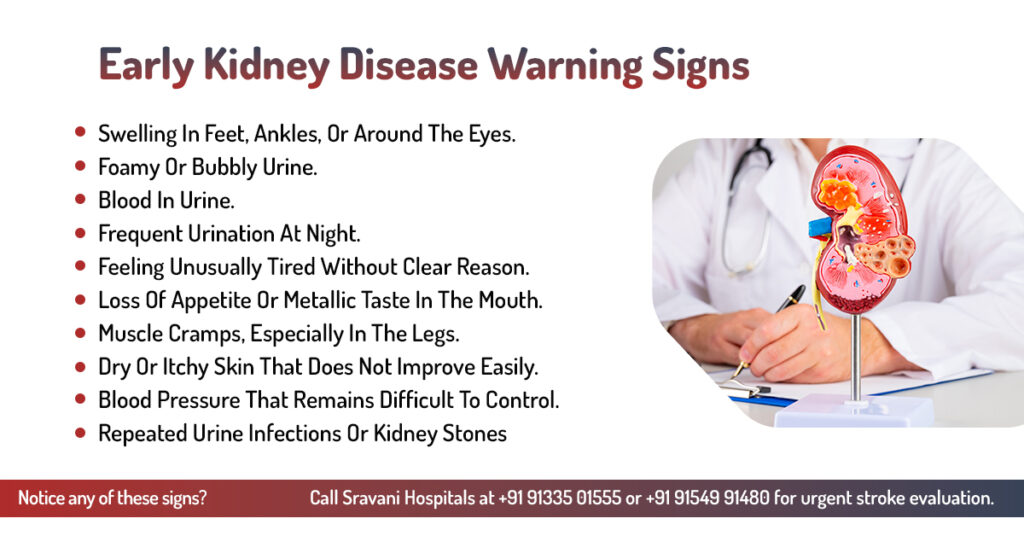
When Should You See A Nephrologist Even If You Feel Mostly Normal?
Kidney disease grows quietly, which is why doctors advise people to pay attention to certain warning signs even when they feel mostly normal. These signs do not always mean kidney disease, but if they keep appearing, they should prompt a kidney check.
These warning signs come quietly and may look harmless in the start. However, when they persist, it is already too late. Hence, a timely check with a nephrology hospital in Madhapur can help doctors find these kidney problems early through the right tests.
Doctors recommend a kidney evaluation when these red flags appear repeatedly. Many families choose consultation at the best nephrology hospital in Hyderabad so that symptoms, test reports, and risk factors can be assessed together before the condition worsens any further.
Don’t Wait For Symptoms. Protect Your Kidneys With Sravani Hospitals
At Sravani Hospitals, our nephrology team supports early kidney evaluation with blood tests like creatinine, urea, electrolytes, sugar and haemoglobin. They also check urine routine, urine protein tests or urine culture when infection is suspected. We review your reports in simple language and guide the next step based on what your kidneys actually need.
If you need clear guidance, the best nephrology hospital in Madhapur can help you act before symptoms turn serious. Do not ignore small signs. Choose Sravani Hospitals and book your kidney consultation today at +91 9154991480.
FAQs
Can kidney disease really develop without symptoms?
Yes, it can. Many people feel normal even when kidney function starts falling. That is why routine blood and urine tests matter.
How often should kidney tests be done if I have diabetes or high blood pressure?
Doctors advise kidney tests once a year for people with diabetes or high blood pressure. Regular testing helps catch kidney damage early.
Does foamy urine always mean kidney disease?
Not always, but it should not be ignored. Foamy urine can indicate protein in urine, which may point to early kidney damage.
Can kidney disease be controlled if it is detected early?
Yes, early detection helps doctors slow down kidney damage. Proper treatment and lifestyle changes can protect kidney function for many years.
When should I see a nephrologist for kidney health?
You should consult a nephrologist if you have swelling, foamy urine, abnormal kidney reports, or long-term diabetes or high blood pressure. Early advice can prevent serious complications.