

When a child falls and cries in pain, parents panic fast. Swelling can appear within minutes. The arm or leg may look odd. Your child may refuse to move a joint or put weight on a leg. The worry is immediate. Is it a fracture, a dislocation, or something that can affect growth if you delay care? This is why parents search for a pediatric hospital near me and want a clear plan.
Here is the direct answer: keep your child still, support the injured part, reduce swelling with a cold pack, and get an evaluation quickly if pain or movement limits are strong. At Sravani Hospitals, the paediatric and orthopaedic teams guide injury care step by step, from assessment and imaging to casting or surgery decisions when needed.
Keep reading for the exact do’s, don’ts after a fracture of joint injury,, and warning signs.
What Should Parents Do Immediately After A Child’s Fracture Or Joint Injury?
In the first few minutes, your goal is to prevent extra movement, reduce swelling, and reach medical care safely without trying home “fixes.”
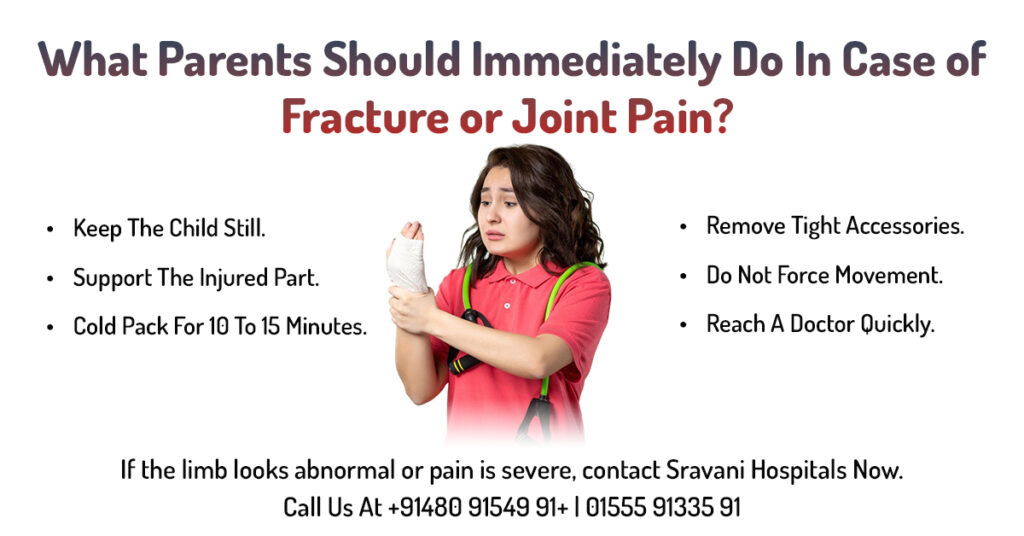
Do This In The First 10 Minutes
- Keep your child still and calm.
- Support the injured arm or leg using a pillow, towel, or sling.
- Apply a cold pack wrapped in cloth for 10 to 15 minutes.
- Elevate the limb gently if your child allows it.
- Remove tight items like rings, bangles, socks, or shoes if swelling is starting.
- Go for medical evaluation if pain is strong or movement is limited.
Avoid These Common Mistakes
- Do not massage the injured area.
- Do not force a joint to move “to check.”
- Do not pull a limb straight or try to set the bone.
- Do not delay care if the limb looks bent or your child cannot use it.
When Should You Go To The Emergency Room For A Child’s Injury?
Go to the emergency room right away if you see deformity, an open wound, numbness, pale or cold fingers or toes, or pain that keeps increasing.
| What You Notice | What To Do Next |
| Mild swelling, child can move fingers or toes | Get checked the same day if pain persists. |
| Visible deformity or limb looks “out of place” | Go to the emergency room now. |
| Numbness, tingling, pale or cold fingers or toes | Go to the emergency room now. |
| Open wound near the injury | Go to the emergency room now. |
| Pain increasing fast, child very uncomfortable | Get urgent evaluation now. |
Take Immediate Action If You Notice Any Of These Signs
- The arm or leg looks bent, twisted, or out of shape.
- Your child cannot stand, walk, or use the limb.
- Fingers or toes look pale, cold, or feel numb.
- There is an open wound near the injury with bleeding.
- Pain keeps rising even after rest and a cold pack.
If your child becomes unusually restless and pain seems to keep increasing, immediately consult with a pediatric hospital in Hyderabad.
How Can You Tell If It Is A Fracture, Dislocation, Or A Sprain?
You cannot confirm this at home with full certainty, because symptoms overlap. But the pattern can tell you how urgent it is.
Fracture Is More Likely When
- Pain is strong and the child refuses to use the limb.
- Swelling increases quickly.
- There is tenderness at one specific spot on the bone.
- The limb looks bent or shorter than normal.
Dislocation Is More Likely When
- A joint looks out of position.
- Movement is very limited and painful immediately.
- The joint looks visibly different compared to the other side.
Sprain Is More Likely When
- Pain is around the joint, not a specific bone spot.
- There is swelling, but the limb shape looks normal.
- The child can still move the limb a little, even if it hurts.
If your child cannot use the limb normally, an evaluation is the safest next step. Visit Sravani Hospitals, the best pediatric hospital near me for urgent evaluation.
How Is A Fracture Or Joint Injury Diagnosed In Children?
Doctors diagnose it using a physical check and an X-ray in most cases, and they add other tests only when needed.
What The Doctor Checks First?
- Where the pain is maximum when touched gently.
- Swelling and bruising pattern.
- Finger or toe movement and sensation.
- Circulation in the hand or foot.
- Joint stability and range of movement.
Tests That Are Common
- X-ray: Most fractures and many joint injuries show up here.
- Other imaging: Used only when the injury is complex or the first test is unclear.
Why Is Pediatric Orthopedic Trauma Managed Differently Than Adult Trauma?
Children’s bones grow, so treatment protects growth areas and future alignment, not only today’s pain relief.
This is the real meaning of pediatric orthopedic trauma: principles of management. The goal is to align the bone safely, protect growth plates near joints, and choose the simplest safe option that heals well.
- Children often heal faster than adults.
- Some minor alignment issues can improve as a child grows.
- Injuries near joints need extra care to protect movement and growth.
You may hear your doctor explain pediatric orthopedic trauma: principles of management when they decide if a cast is enough or if surgery is safer.
When Does A Child Need A Cast And When Is Surgery Needed?
Many injuries heal well with a splint or cast, but surgery may be needed when the injury is unstable, badly displaced, open, or affecting joint alignment or circulation.
Common Situations Where A Cast Or Splint Is Enough
- Stable fractures where the bone pieces are already in a good position.
- Small cracks that do not shift out of place.
- Some joint injuries that are stable after assessment.
Situations Where Surgery Is Considered
- Open injuries with a wound near the fracture.
- Unstable fractures that will not stay aligned in a cast.
- Fractures involving a joint surface where alignment affects movement.
- Circulation or nerve concerns, such as numbness or pale, cold fingers or toes.
Cast Vs Surgery In Simple Terms
| Treatment | When Doctors Usually Choose It |
| Cast or splint | When alignment is acceptable and the injury is stable. |
| Reduction plus cast | When the bone needs repositioning first, then a cast holds it. |
| Surgery | When stability, alignment, wound care, or circulation makes it necessary. |
Families searching for the best orthopedic hospital in Hyderabad or best orthopedic hospital in Madhapur usually want one thing: clear reasoning for why a cast is enough, or why surgery is needed for this specific injury. Book your consultation with Sravani Hospitals, the best orthopedic hospital in Hyderabad and the best orthopedic hospital in Madhapur now.
What Should Parents Do At Home After A Cast, Splint, Or Surgery?
Home care affects comfort and healing. A simple routine also helps you spot problems early.
First 48 Hours Care
- Keep the limb elevated as advised.
- Use cold packs only if the doctor recommends it.
- Give pain medicine only as prescribed.
- Limit running, jumping, and rough play.
- Check fingers or toes for colour, warmth, and movement.
Cast Care Do’s
- Keep the cast dry.
- Keep small objects away from the cast.
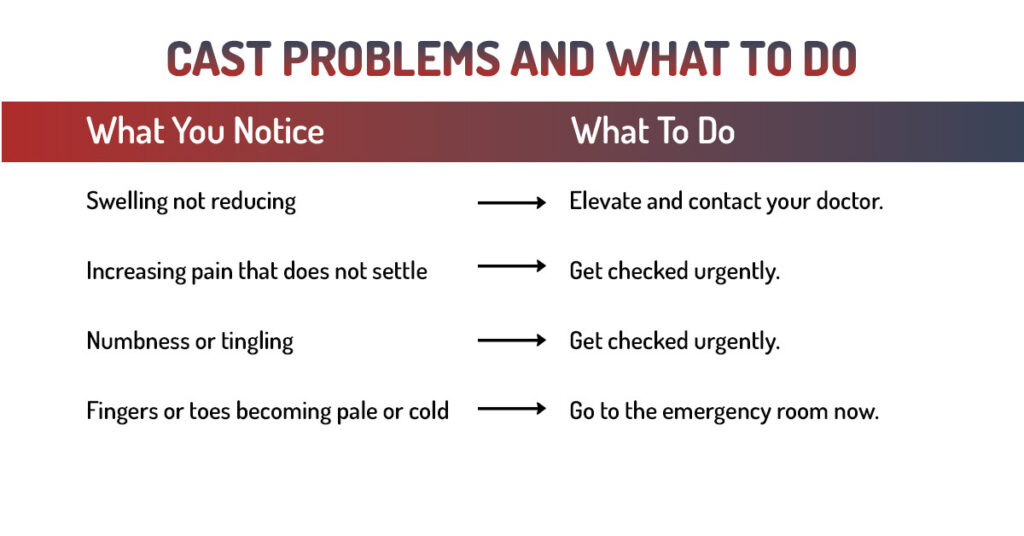
- Return if pain increases or swelling worsens.
- Return if the cast cracks, loosens, or smells bad.
What Complications Should Parents Watch For During Fracture Healing?
Most children heal well, but you should watch for warning signs that need urgent review.
Warning Signs During Fracture and Joint Pain Healing
- Pain that keeps increasing instead of settling.
- New numbness, tingling, or weakness.
- Fingers or toes turning pale, cold, or not moving normally.
- Very tight cast feeling with rising discomfort.
- Fever, redness, or discharge around a wound or surgical area.
These checks fit directly into pediatric orthopedic trauma: principles of management, because early reporting prevents bigger problems.
How Do You Choose The Right Hospital For Pediatric Trauma In Hyderabad And Madhapur?
Choose a hospital that can assess quickly, do the right imaging, manage pain safely, and coordinate paediatrics with orthopaedics when needed. If you are searching for a pediatric hospital in Hyderabad, use this simple checklist:
- A paediatric team that handles children gently and clearly.
- An orthopaedic team experienced fractures and joint injuries.
- A clear plan for follow up, cast care, and activity restrictions.
If you are comparing the best pediatric hospital in Hyderabad and the best pediatric hospital in Madhapur, focus on how clearly the team explains the plan and the next step.
Book Your Child’s Ortho Consultation At Sravani Hospitals Now
If your child has severe pain, visible deformity, or cannot use an arm or leg, early assessment supports better healing and reduces the risk of complications.
At Sravani Hospitals, parents get a coordinated approach where paediatric and orthopaedic teams guide care step by step, from assessment and imaging to casting or orthopedic surgery decisions when needed. This helps families who are urgently searching for a pediatric hospital near me and want a clear plan.
If you are looking for a pediatric hospital in Hyderabad, the best pediatric hospital in Hyderabad, or the best pediatric hospital in Madhapur, Sravani Hospitals supports timely evaluation and follow up guidance.
If your concern is a fracture or joint injury, you can also approach the orthopaedic team, especially if you are comparing the best orthopedic hospital in Hyderabad or Best orthopedic hospital in Madhapur options. Call us now at +91 91335 01555.
FAQs
How Can I Tell If My Child Has A Fracture Or A Sprain?
A fracture often causes strong pain, swelling, and refusal to use the limb. A sprain can also hurt, so if your child cannot move the limb normally, an X-ray check is a safe next step.
What Should I Do Before Reaching The Hospital?
Keep the limb still, support it, and use a cold pack wrapped in cloth for short periods. Do not try to straighten the limb or push a joint back into place.
When Is Surgery Needed For A Child’s Fracture?
Surgery may be needed when the fracture is open, unstable, badly displaced, or affecting blood flow or nerves. The doctor decides based on the injury pattern and what keeps healing safest.
How Long Will A Cast Stay On?
It depends on the bone, the fracture type, and your child’s age. Many children need a cast for a few weeks, and the doctor confirms healing during follow up visits.
What Are The Warning Signs That A Cast Is Too Tight?
Increasing pain, swelling, numbness, pale or cold fingers or toes, or a very tight cast feeling are warning signs. These need urgent review.
Can A Fracture Affect My Child’s Growth?
Some injuries near growth plates need careful alignment and follow up. This is why paediatric orthopaedic care focuses on protecting future growth and movement.
When Can My Child Return To Sports After A Fracture?
Return depends on healing and strength, not only on days. Your doctor will advise a safe timeline after follow up checks.
Should I Seek A Second Opinion For A Child’s Fracture?
If pain is not improving, the limb looks more deformed, or you feel unclear about the plan, a second opinion can help. Choose a team that follows Pediatric orthopedic trauma: principles of management and explains the “why” behind treatment.