

Most women who come in with a gynaecological cancer diagnosis had noticed something weeks or months earlier. A bit of unusual bleeding, some bloating or a pelvic discomfort they put down to stress.
The gap between noticing something and taking action about it is where awareness makes the real difference. A closer look at gynaecological cancers tells that many of these conditions, when caught early, respond well to actual treatment.
Sravani Hospitals, a gynecology hospital in Kukatpally and Madhapur,offer gynaecological consultations in a space where women can speak openly, ask questions without feeling rushed, and get clear answers about what is normal and what needs further action.
This guide by our gynecologists covers the 5 main types of gynaecological cancers, the symptoms that deserve your attention, the risk factors and how early evaluation at the best gynecologist hospital in Madhapur actually helps.
What Are Gynaecological Cancers?
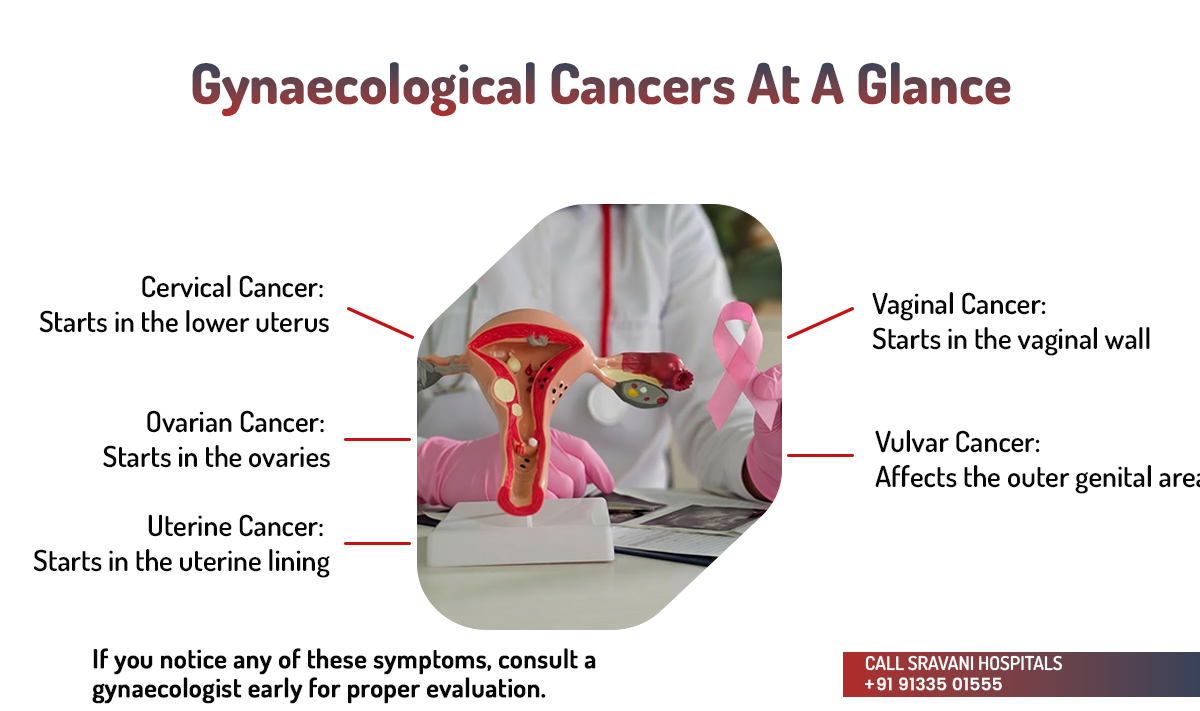
Gynaecological cancers occur in a woman’s reproductive organs. The five main types are cervical, ovarian, vaginal, uterine (endometrial), and vulvar cancer.
In India, three of these five that are cervical, ovarian, and uterine cancer are particularly common. What makes these cancers complicated is that the early symptoms are often easy to ignore or attribute to some other issue.
The Main Types of Gynaecological Cancers: What You Need to Know About Each One?
The five main types of Gynaecological cancers are cervical, ovarian, uterine (endometrial), vaginal, and vulvar cancer. Each one starts in a different place. Each one behaves differently. And each one has its own set of warning signs.
Cervical Cancer
This affects the lower part of the uterus, the cervix, which connects the uterus to the vagina. It is one of the more preventable gynaecological cancers because it develops slowly and can be detected through routine screening.
Symptoms to watch for: Bleeding between periods, bleeding after sex, unusual vaginal discharge, or pelvic discomfort that does not have an obvious cause.
Ovarian Cancer
Ovarian cancer is often called a silent cancer because the symptoms are vague and easy to attribute to digestion, stress, or general fatigue. By the time many women are diagnosed, it has already progressed.
Symptoms to watch for: Persistent bloating, a feeling of fullness after eating very little, pelvic or abdominal pain, and the need to urinate more frequently. If these have been present for two weeks or more and are new for you, they are worth raising with a doctor.
Endometrial Cancer
This starts in the lining of the uterus, called the endometrium. It is the most common gynaecological cancer in women after menopause. The good news is that it often signals itself early through a symptom most women recognise as wrong: bleeding after menopause.
Symptoms to watch for: Postmenopausal bleeding, bleeding between periods, unusual vaginal discharge, or pelvic pain. For younger women, irregular or unusually heavy periods that are new can also be a signal.
Vaginal and Vulvar Cancers
These are less common but still important to be aware of. Vulvar cancer affects the external genital area and often causes itching, burning, soreness. Vaginal cancer can cause unusual bleeding or discharge.
Risk Factors: What Raises the Chances of Gynecological Cancer?
Risk factors do not mean certainty. Many women with several risk factors never develop gynaecological cancers. And some women with none of the listed factors do. What risk factors tell you is where to be more alert and where regular screening matters most.
For Cervical Cancer
- HPV infection (human papillomavirus)
- Smoking
- Multiple sexual partners
- A history of other sexually transmitted infections
For Ovarian Cancer
- Family history of ovarian or breast cancer
- BRCA gene mutations (BRCA1 or BRCA2)
- Never having been pregnant
- Age: risk increases after 50
- Endometriosis
For Uterine Cancer
- Obesity: oestrogen levels are higher in women with excess body weight
- Hormone replacement therapy using oestrogen alone
- PCOS
- Never having been pregnant
- Diabetes or high BP
- Family history of cancer
If you have several of the above for any one type, it is worth having a conversation with the best gynecologist near me about appropriate screening or monitoring.
The One Thing That Changes Outcomes Most: Catching It Early
There is a reason gynecologists in Kukatpallytalk about early detection so often. It is not a slogan. It is because the difference in treatment options and outcomes between an early-stage and a late-stage diagnosis is genuinely significant.
Cervical cancer detected at an early stage has survival rates above 90 percent in most studies. Uterine cancer detected early, before it has spread, responds well to surgical treatment in most cases.
In India, the challenge is that most women arrive for cancer diagnosis at an advanced stage. This happens because symptoms are dismissed, screening is not in routine for many women, and there is still hesitation discussing gynaecological concerns openly.
If something feels different in your body and it has been there for two weeks or more, that is enough reason to mention it to a gynecologist in Kukatpally.
What Does a Gynaecological Consultation Actually Involve?
A first gynaecological consultation for a concern typically involves a conversation about your symptoms: when they started, how frequent they are, whether anything makes them better or worse.
Also a review of your medical history and family history, and physical examination, is performed. And discussion about any investigations that might be needed: blood tests, ultrasound, or other imaging is done.
The consultation at gynecology hospital in Kukatpally is a conversation. You can ask questions. You can say what is worrying you. The best gynecologist hospital in Madhapur job is to give you accurate information and a clear next step.
Book a Gynaecology Consultation at Sravani Hospitals
Noticing something that does not feel right? The best next step is having a conversation with someone qualified to evaluate your symptoms properly.
At Sravani Hospitals, gynaecological consultations are handled in a setting where women feel comfortable along with being honest about their concerns. Evaluation by the gynecologist in Kukatpally, includes symptom review, pelvic assessment, and imaging or Pap smear, so you leave with clarity rather than confusion.
The obstetrics and gynaecology team at Sravani Hospitals supports women through routine preventive care, evaluation of unusual symptoms, and management of gynaecological conditions at both the Madhapur and Kukatpally branches.
To book a consultation call +91 91335 01555.
Frequently Asked Questions
What are the most common gynaecological cancers in India?
The three most common gynaecological cancers in India are cervical, ovarian, and uterine (endometrial) cancer.
What symptoms should I never ignore?
Symptoms like bleeding after menopause, bleeding between periods and after sex that last for about 2 weeks should be acted immediately.
Can gynaecological cancers be prevented?
Some gynaecological cancers can be prevented, but the risk of all 5 can be reduced by early action and regular screening.
I have no symptoms. Do I still need to see a gynaecologist?
Yes. Routine check-ups and gynaecologist visits help find conditions before symptoms occur. Annual or biennial gynaecological reviews, is the best way to take care of your health.