

Knee arthritis does not just cause pain. It also changes how far you can walk before stopping, and how often you cancel meetup plans. The balance and quality of life after total knee replacement reliably improves within just one year of surgery. And most patients reach health scores comparable to healthy adults of the same age.
Sravani Hospitals, an orthopedic hospital in Madhapur provides the orthopaedic team who guides patients through pre-surgery evaluation, imaging-based decision making, and structured rehabilitation so every stage of the process is understood before it starts.
This guide by our experts covers what after life actually means and how the surgery improves it across three distinct areas: physical, emotional, and social.
What Does Quality of Life Actually Mean After Knee Replacement?
Quality of life is calculated as the sum of how freely you can move, how well you rest, and how stable you feel on your own feet. Clinicians measure it using tools like the WOMAC index, the Oxford Knee Score, and the EuroQol-5D scale. These scores capture real changes in:
- Pain during rest, movement, and sleep
- Ability to perform daily tasks: walking, stair climbing, sitting
- Emotional state: anxiety, mood, and sense of independence
- Participation in social and family life
- Balance and confidence when standing or moving
The 3 ways how total knee replacement at the best orthopedic hospital in Kukatpally enhances quality of life include:
- Physical: reduced pain, restored movement, and improved balance
- Emotional: lower anxiety, better sleep, and renewed confidence
- Social: return to family activities, outings, and daily independence
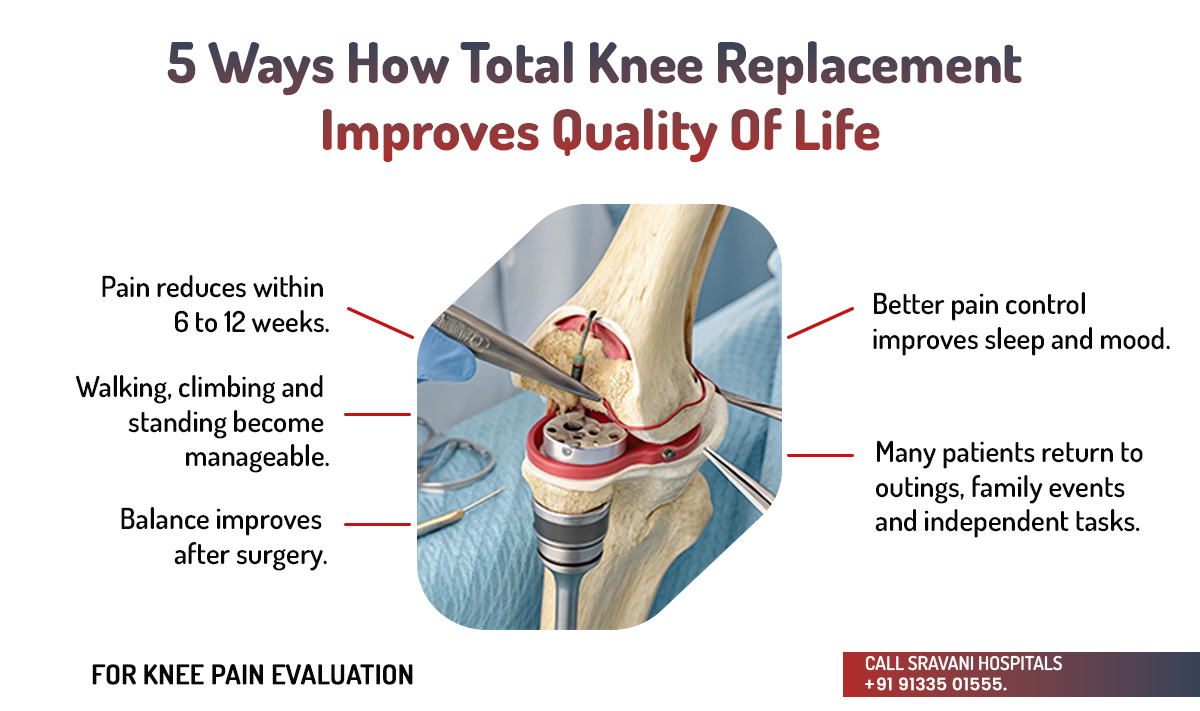
Physical Changes After Total Knee Replacement
The physical improvements after total knee replacement are the most immediate and the most measurable. They are also what most patients feel first during recovery.
Pain Relief and Restored Movement
Before surgery, movement becomes guarded and limited, the knee signals are dangerous at every step. Total knee replacement removes the damaged surface and replaces them to distribute load evenly and smoothly.
Most patients report meaningful pain reduction within 6-12 weeks as the initial healing phase passes and rehabilitation progresses. Activities that become possible again after full recovery include:
- Walking longer distances without stopping for pain
- Climbing stairs with confidence on both legs
- Standing in a kitchen, or during social occasions without discomfort
- Travelling to distances without special arrangements
- Physical activities say walking, cycling or swimming.
You Must Remember: Running or heavy lifting are high intense physical activities and are mostly not advised after total knee replacement surgery.
Balance and Mobility After Total Knee Replacement
Balance improvement is one of the most clinically significant and least discussed outcomes of total knee replacement. When the knee is severely arthritic, the body compensates constantly. Gait changes. Posture shifts. Muscles that should not carry that load begin to do so. The whole balance system is affected.
Better balance means balance and quality of life after total knee replacementas it offers:
- Reduced risk of falls, which is critical for patients aged 60 and above
- More confidence on uneven ground, and stairs
- Better functional mobility
- Improved scores on assessments
You Must Note: Rehabilitation after surgery specifically targets balance through progressive exercises. This is why structured physiotherapy is not optional. It is where surgical success turns real and lasting.
Emotional Changes After Total Knee Replacement
Chronic knee pain does not stay in the joint but also settles in sleep, mood and outlook. Patients prefer gradual withdrawal that is fewer outings, reduced plans, and a quiet sense of loss.
After successful total knee replacement and rehabilitation, the emotional changes look like:
- Reduced anxiety: Patients with severe knee arthritis fear of losing balance or being unsafe on stairs.
- Better sleep: Night pain is the most common and disruptive symptom before surgery as pain hampers sleep.
- Renewed confidence: The feeling of being able to move without guarding the knee brings confidence.
- Improved sense of control: Patients start feeling less dependent on others for daily tasks, restores self-esteem and lower depression scores.
Social Changes After Total Knee Replacement
Chronic knee pain narrows the world. Patients stop attending family events, avoid outings, and reduce contact because the effort and pain involved is too high. Over time, this withdrawal becomes its own problem, separate from the knee itself.
After total knee replacement at an orthopedic hospital in Kukatpally, the social changes patients value are:
- Returning to family occasions: Weddings, gatherings, and everyday meals that require standing or walking come into life again.
- Resuming social outings: Shopping, trips, temple visits, and community activities is part of daily life now.
- Reduced dependence on family members: Patients who needed constant help for basic tasks regain independence.
- Engagement in work or volunteering: Patients who are professionally active, return to the workplace, purpose and identity,
Book an Orthopaedic Consultation at Sravani Hospitals in Kukatpally
If knee pain is limiting your movement, your sleep, or your ability to do what you used to do without thinking, the most important next step is a proper clinical evaluation: with an imaging-based opinion and a written plan.
At Sravani Hospitals, the best orthopedic hospital in Kukatpally, orthopaedic evaluation is guided by imaging review, clinical assessment, and structured treatment planning. Patients understand exactly what is happening in the knee, what the right option is for their specific condition, and what recovery will look like before any decision is made.
Dr. Swaroop Chandra and Dr. Shiva Kanth Manthri at Sravani Hospital, with expertise in joint replacement and minimally invasive orthopaedic procedures, focuses on helping patients make informed decisions backed by clinical findings.
To book a consultation at the best orthopaedic hospital near me, call +91 91335 01555.
Frequently Asked Questions
Does total knee replacement improve quality of life?
Yes, total knee replacement significantly improves pain, movement, balance, and overall quality of life within one year of surgery.
Does balance improve after total knee replacement?
Yes. Better balance after knee surgery reduces the risk of fall and is directly connected to higher quality of life scores. But structured physiotherapy is key to achieving this outcome.
How long does it take to feel normal after total knee replacement?
Most patients feel better within six to twelve weeks of knee replacement. But full functional recovery, including balance and strength, starts between three and twelve months after surgery.
What activities should be avoided after total knee replacement?
High impact activities like running, jumping, or heavy sports are generally not advised after total knee replacement. Activities like walking, swimming, and cycling actually work.